Tutorial
Reviewing an AI-generated advertising clip before approval
A structured approval pass for AI-assisted advertising clips, covering continuity, brand detail, physical behaviour, edit points and delivery.
Review an AI-assisted advertising clip against explicit requirements rather than the attractiveness of its best frame. Separate the creative message, product accuracy and delivery checks. That makes feedback specific and helps the team decide when to repair a clip and when to replace it.
Define approval criteria before watching candidates
Write down the requirements that decide whether a clip can be used. For an advertisement, those may include the correct product variant, readable approved branding, a particular action and enough clean frames for the edit. Separate essential requirements from preferences about mood.
Decide who reviews factual product detail and who signs off the creative treatment. A strong visual impression should not be treated as a substitute for a product check, and a correct packshot does not establish that the edit communicates the intended message.
Watch once for the message, then inspect the evidence
Start with normal-speed playback at a realistic viewing size. Ask what the viewer understands and where attention goes. Note any distraction without immediately pausing to repair it.
Then inspect the relevant frame ranges. Check the start, the end and the moments where objects turn, overlap or move quickly. Follow a few identifying details through the clip. Do they remain part of the same object, or does the picture become a series of individually plausible but inconsistent frames?
The linked Runway guide provides input/output examples for one model family. Use them as visual references for the relationship between instruction and result, not as a quality benchmark or evidence of a model's reliability across unrelated tasks.
Check the product and its behaviour separately
Compare the clip with approved artwork and references. Verify silhouette, component count, important text and colour relationships. Where lighting changes the appearance, ask whether the treatment still presents the intended product honestly.
Next inspect behaviour: contact, direction of motion, shadows, reflections and interactions. If the film appears to demonstrate a mechanism, have that mechanism reviewed against real information. Plausibility is not a technical approval.
For an illustrative coffee-pack shot, the package may remain recognisable while the printed weight or flavour changes during a turn. Treat that as a specific defect. Do not mark the whole clip correct simply because the largest logo survives.
Inspect the joins in the final edit
Review tracked graphics, masks, transitions and added text. A grid or simple reference overlay can help expose sliding in a repaired area; Boris FX's illustrated tracking material explains that kind of inspection. It does not establish whether the generated subject itself is correct.
Check the intended cut points. A shot can look good in isolation but leave no clean opening, ending or matching action for the next clip. Confirm that retiming or transitions have not introduced a new glitch.
Listen to the final sound version and watch a sound-off version when the placement requires it. Confirm that important information is carried visually or through the approved caption treatment, rather than existing only in a temporary voiceover.
Keep a decision record that can be acted on
Use an issue list with shot name, time range, observation, importance and next action. Distinguish must-fix errors from optional refinements. Replace vague notes such as more premium with an observable request, for example a calmer camera move or a clearer product hold.
A compact final pass covers:
1. Product identity and approved information.
2. Continuity and physical relationships.
3. Compositing and graphic readability.
4. Edit points and timing.
5. Sound, captions and delivery versions.
6. The actual exported file at its intended size.
Record unresolved limitations before approval. This checklist is a production review aid, not legal clearance, a guarantee of platform acceptance or proof that the underlying generative process is free of risk. The useful outcome is a clear decision to accept, revise or replace the clip.
Sources and visual references
- Gen-4 Video Prompting Guide — Runway
Visual input/output examples for a named model; not independent performance testing.
- Mocha 2025.5 User Guide — Boris FX
Illustrated tracking surfaces and grids help review sliding in composited elements.
Related reading
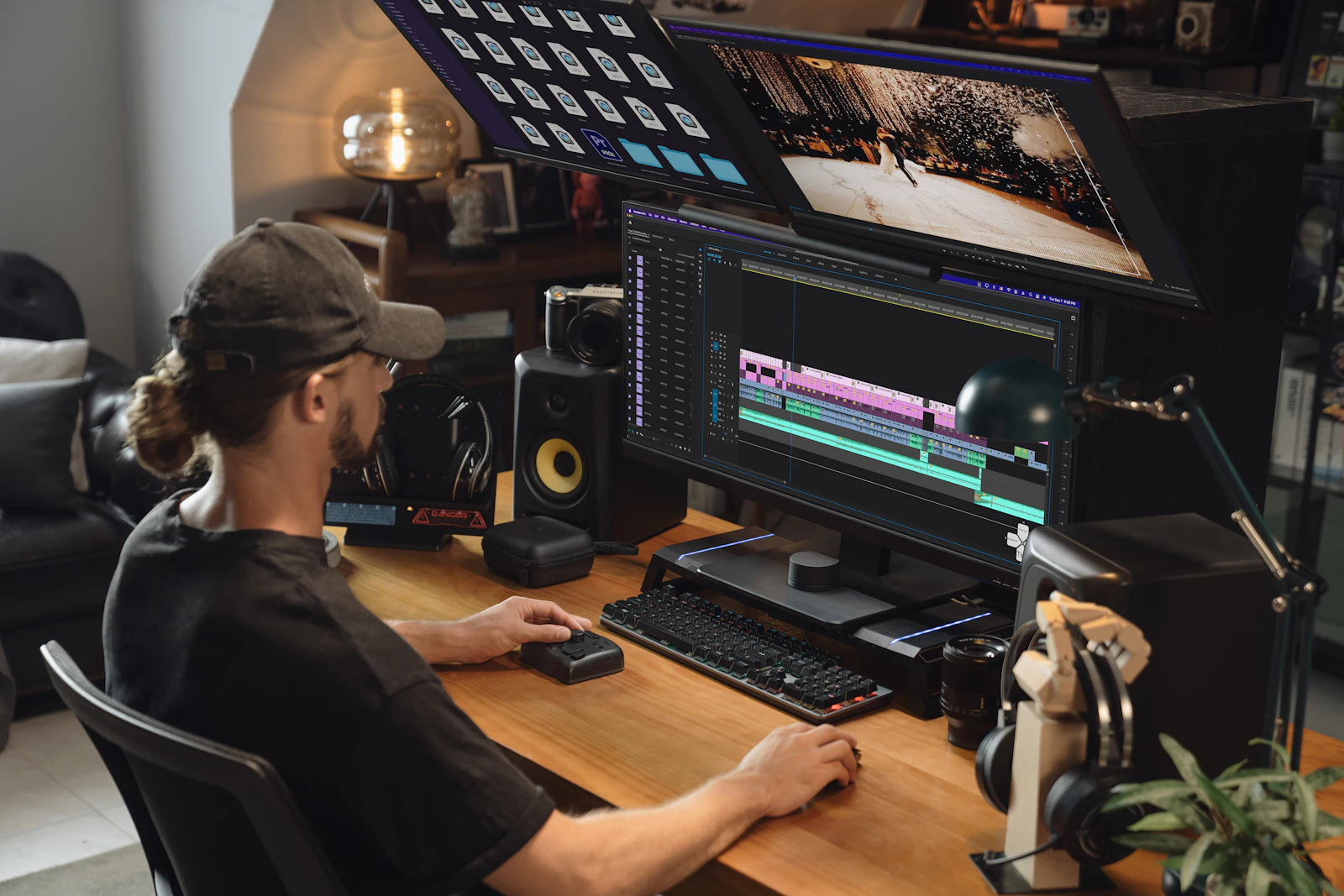
Cover image
- Cover illustration: TourBox / Unsplash.
Editorial illustration of the article topic.
- Image licence — Unsplash
Free use, including commercial use, under the Unsplash License.