Tutorial
The value of CGI after one film: building reusable product assets
A finished render is only one output. Plan geometry, materials, versions and handover so a product scene can support the next campaign too.
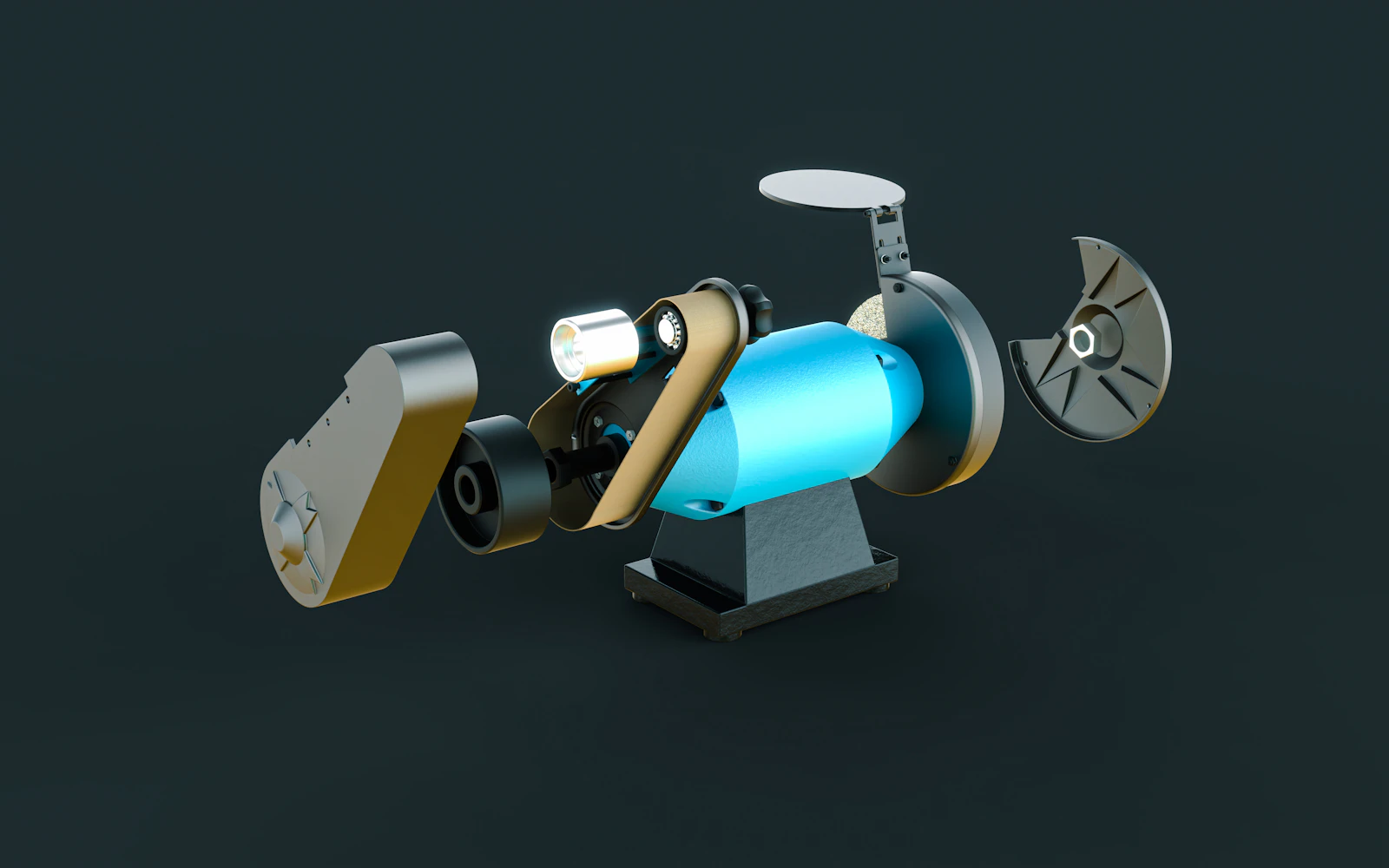
A product film is often commissioned as a single delivery, while the product itself will appear in many places. The next request might be a new colour, a vertical advert, a retailer still or a demonstration of a detail that barely appeared in the original edit. Planning for those requests changes the value of the CGI work.
The opportunity is practical: create a useful asset, then make sure the team can find, understand and adapt it. Reuse is a production decision, not an automatic property of a 3D file.
Decide what should survive the campaign
Start with the product geometry, material definitions, label artwork and approved dimensions. Identify which parts are specific to the original film and which could serve later work. A camera move built for one composition may be disposable; a well-organised product model may remain useful.
Blender’s asset-library documentation describes reusable data such as objects, materials and collections. The principle is broader than one application: a reusable item needs context and organisation, not simply a place on a hard drive.
Separate product truth from campaign styling
Keep an approved product version distinct from experimental lighting, backgrounds and treatments. Name variants clearly and record the reference used for each one. If the physical product changes, create an explicit update rather than silently overwriting the version used in a delivered film.
Consider an imagined appliance with two finishes. A future campaign may need the same camera move in both. The asset should make it clear which material changes are approved and which features must remain identical. This reduces ambiguity when a different artist opens the scene months later.
Include the information needed for targeted changes
A useful handover can contain organised scene files, linked textures, application versions, colour-management notes and a short guide to the controls most likely to be changed. Where appropriate, supply compositing passes and explain their purpose. Render passes separate information such as depth or lighting, as illustrated in Blender’s manual.
Confirm which source files and usage permissions are included in the production agreement. An exported video does not establish that an editable scene, third-party assets or every working file will also be delivered. Resolve that scope before assuming later work can reuse it.
Check reuse with a small real task
Before calling the package complete, ask someone other than the original artist to open it and perform a likely change. They might replace a finish, adjust a camera or render a still at the required aspect ratio. Record missing files, unclear names and undocumented settings.
This test is more revealing than counting folders. A beautiful render with broken dependencies has limited practical value as a reusable production asset. Equally, an elaborate library may be unnecessary for a one-off concept with no planned follow-up.
Treat savings as a question to measure
Do not promise that reuse makes every future job inexpensive. A new product structure, different animation requirement or major software change may still require substantial work. Compare the actual preparation avoided with the work needed to adapt and maintain the asset.
CGI can provide value beyond its first image when the client receives a controllable, documented representation of the product. The most useful proposal connects that possibility to specific future outputs, and makes the handover detailed enough for the promise to be tested.
Sources and further reading
- Asset libraries — Blender Manual
Official documentation of reusable assets and their organisation.
- Render passes — Blender Manual
Official illustrated documentation of separated rendering information.
Related reading
Cover image
- Cover illustration: Vertex Designs / Unsplash.
Editorial illustration. Unsplash License; not a DELA production still.