News
The creative industry in 2031: three AI scenarios worth preparing for
DELA’s five-year outlook explores cheaper variation, the value of direction and the demand for trusted production. These are scenarios, not forecasts.

What might creative production look like five years from now? The most useful answer is not a single prediction about disappearing jobs or an entirely automated studio. It is a set of possible conditions that a brand or production team can prepare for without pretending to know which will dominate.
This is DELA’s editorial outlook from October 2026 to 2031. The scenarios below are conditional arguments, not market forecasts, and the article makes no claim to know future prices, employment levels or model capabilities.
What the evidence can and cannot tell us
The ILO’s 2025 work examines occupational exposure to generative AI at task level. It argues that transformation is more likely than complete replacement for many jobs because occupations combine tasks requiring different kinds of input. Exposure measures should not be treated as a timetable for a particular studio’s future.
For creative work, this suggests a useful way to frame the discussion: separate generating an option, selecting a direction, managing a client decision and delivering an approved result. A change in one activity does not establish the same change in all the others.
Scenario one: variation becomes cheaper than attention
If dependable generation and adaptation continue to become easier, brands could commission more visual variants. The constraint may move towards choosing which deserve production time and audience attention. In this scenario, a studio competes partly through its ability to reduce options into a clear campaign.
A useful preparation is to build a stronger selection process now. Record why an idea was chosen, how it serves the brief and which variations are worth testing. Watch whether clients begin requesting more outputs without increasing their capacity to review them. That would be a signal that the bottleneck is changing.
Scenario two: controlled assets become more valuable
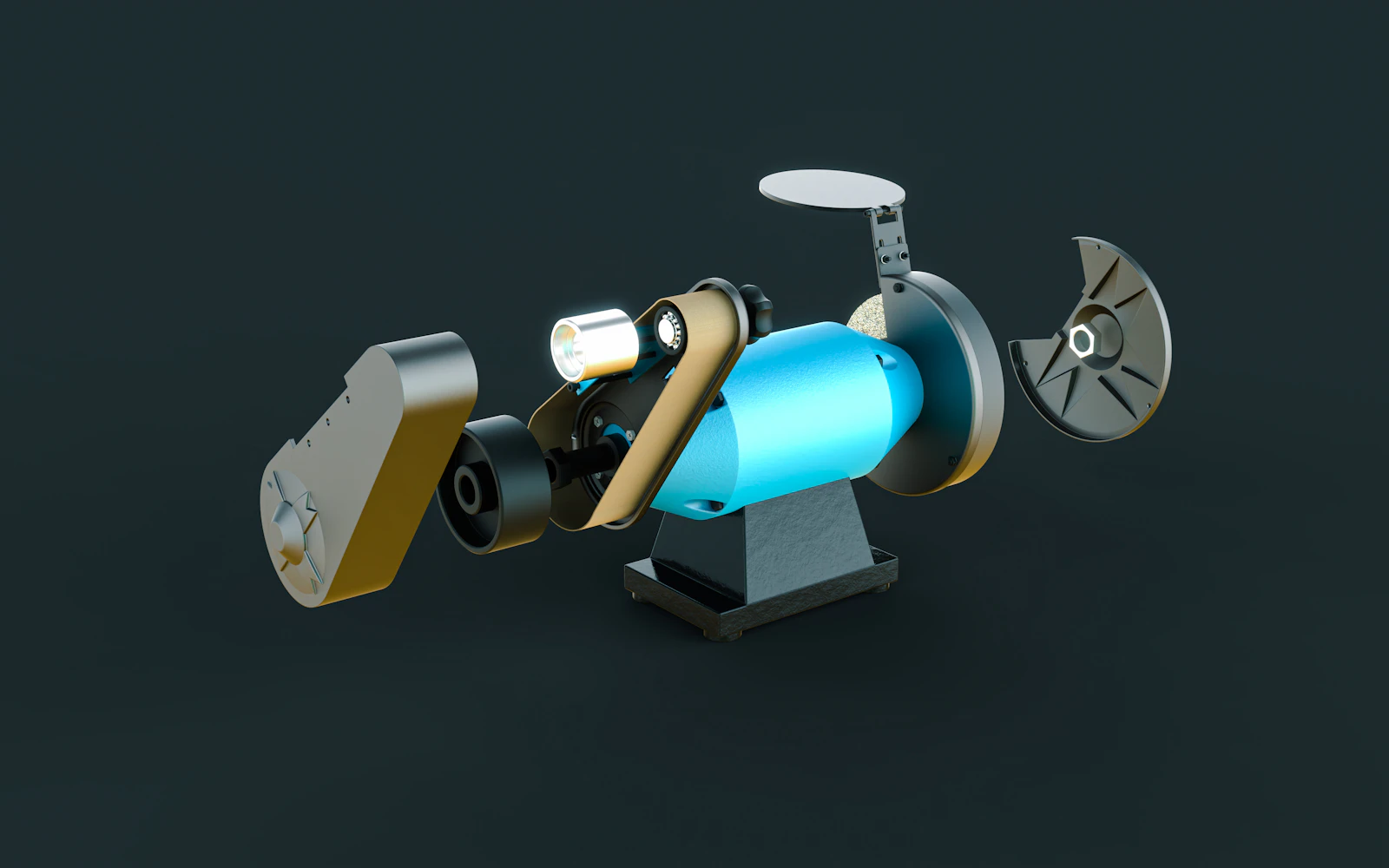
Another possibility is that increased output volume raises demand for consistent product representations. Brands may need a dependable source for geometry, approved wording and visual identity across many variations. CGI assets, verified references and well-documented templates could support that requirement.
Existing asset-library systems already organise reusable objects and materials; Blender’s documentation illustrates the underlying production idea. The forecast is not that one file format will win, but that organised, usable source material may matter more when variations multiply. Teams can prepare by testing handovers and maintaining clear product versions.
Scenario three: trust becomes a purchasing criterion
If convincing synthetic content becomes commonplace, some clients may place greater value on knowing how an image was made and what it accurately represents. That could favour teams able to document sources, explain corrections and distinguish a product demonstration from an imaginative visual treatment.
This would not eliminate expressive or artificial imagery. It could make clarity about purpose more valuable. A brand might freely use an impossible world for atmosphere while requiring tighter evidence for a scene that demonstrates a functional claim. Watch how approval requirements change, rather than assuming every campaign will move in the same direction.
The less comfortable possibility
Easier production does not guarantee that every studio benefits. More output could bring lower fees for some services, greater competition and heavier review workloads. New tools might also be less predictable, more costly to maintain or less compatible with a client’s needs than expected.
Prepare for that uncertainty with small experiments and portable skills. Direction, editing, clear writing, visual judgement and the ability to organise a production remain useful across different tools. Keep enough technical understanding to evaluate a workflow without building the business around one impressive demonstration.
Make a plan that works across scenarios
For the next project, improve one reusable asset, one approval process and one way of recording production cost. Those are modest steps that can help whether the future brings more generation, more demands for control or both.
Our view is that the strongest creative offering will explain the decision behind the image as clearly as the image itself. By 2031 the tools may be very different. The practical test will still be whether the work communicates something valuable and can be delivered with the reliability the client needs.
Sources and further reading
- Generative AI and Jobs: A Refined Global Index of Occupational Exposure — ILO
2025 task-exposure research. Does not predict the creative industry in 2031.
- Asset libraries — Blender Manual
Official documentation of reusable assets and their organisation.
Related reading
Cover image
- Cover illustration: Christian Boragine / Unsplash.
Editorial illustration. Unsplash License; not a DELA production still.