Tutorial
How to evaluate an AI video pilot without cherry-picking the best result
Set acceptance criteria, log attempts and test a realistic revision before using a successful demo as the basis for a production budget.
A striking demonstration answers one question: can this workflow produce that result at least once? A production decision needs more information. How much effort did it take, which conditions helped, and can the team make a useful revision? A small, well-designed pilot can answer these questions without becoming a large research project.
The following method is a suggested production exercise. It is not a published benchmark or a claim about the performance of a specific model.
Choose a representative task
Use a shot that resembles the real commission. If the campaign depends on readable packaging and a controlled camera move, a beautiful landscape will not test the difficult part. Include the references, output format and constraints that the actual team will have.
Keep the scope narrow enough to finish. One hero shot and one likely revision can reveal more than a broad collection of unrelated experiments. Decide who will approve the result before starting, so the criteria do not shift towards whichever output happens to look best.
Separate critical requirements from preferences
Write a short pass-or-fail list for non-negotiable details, such as the correct product, complete required action and readable approved wording. Score preferences such as atmosphere and stylistic fit separately. A high aesthetic score should not conceal a failed product requirement.
NIST’s generative AI risk profile recommends documented evaluation and cautions against generalising from narrow anecdotal assessments. For a creative pilot, that means describing the exact conditions tested rather than treating one successful clip as proof of universal capability.
Record attempts and human time
Keep a simple log of inputs, model version, available settings, generation attempts, selection time and corrections. Include failed attempts in the record. If a result only becomes usable after significant manual work, that work belongs in the comparison.
There is no universal number of attempts that makes a small pilot statistically reliable. Agree a practical time and cost limit for the decision at hand, and state that limit in the report. The purpose is to reduce uncertainty, not manufacture a headline success rate.
Ask for a normal client change
After selecting an acceptable version, request a plausible revision. Change the background, shorten an action or adapt the frame while preserving the product. Measure whether the approved qualities survive and what additional work is necessary.
This checks the workflow’s usefulness after its most flattering moment. A team may find that generation is suitable for early concepts but a different method is more dependable for final variations. That is a valid pilot result, not a failed experiment.
Make the decision specific
Summarise the outcome in plain language: suitable for this shot under these conditions, suitable with a named manual correction, or not yet suitable within the agreed budget. Keep the approved output and the rejected examples that explain the conclusion.
Identify the next uncertainty only if it could change the production choice. If the main product action already fails the acceptance test, testing ten more decorative backgrounds may add little value. If the action works but delivery time remains uncertain, a repeat run on a second representative shot may be worthwhile.
A useful pilot ends with a decision the producer can act on. It documents what was learned, what remains unknown and where a different technique should take over.
Sources and further reading
- Generative Artificial Intelligence Profile — NIST
July 2024 guidance; confabulation and documented evaluation. The production exercises in this article are DELA editorial suggestions.
Related reading
Cover image
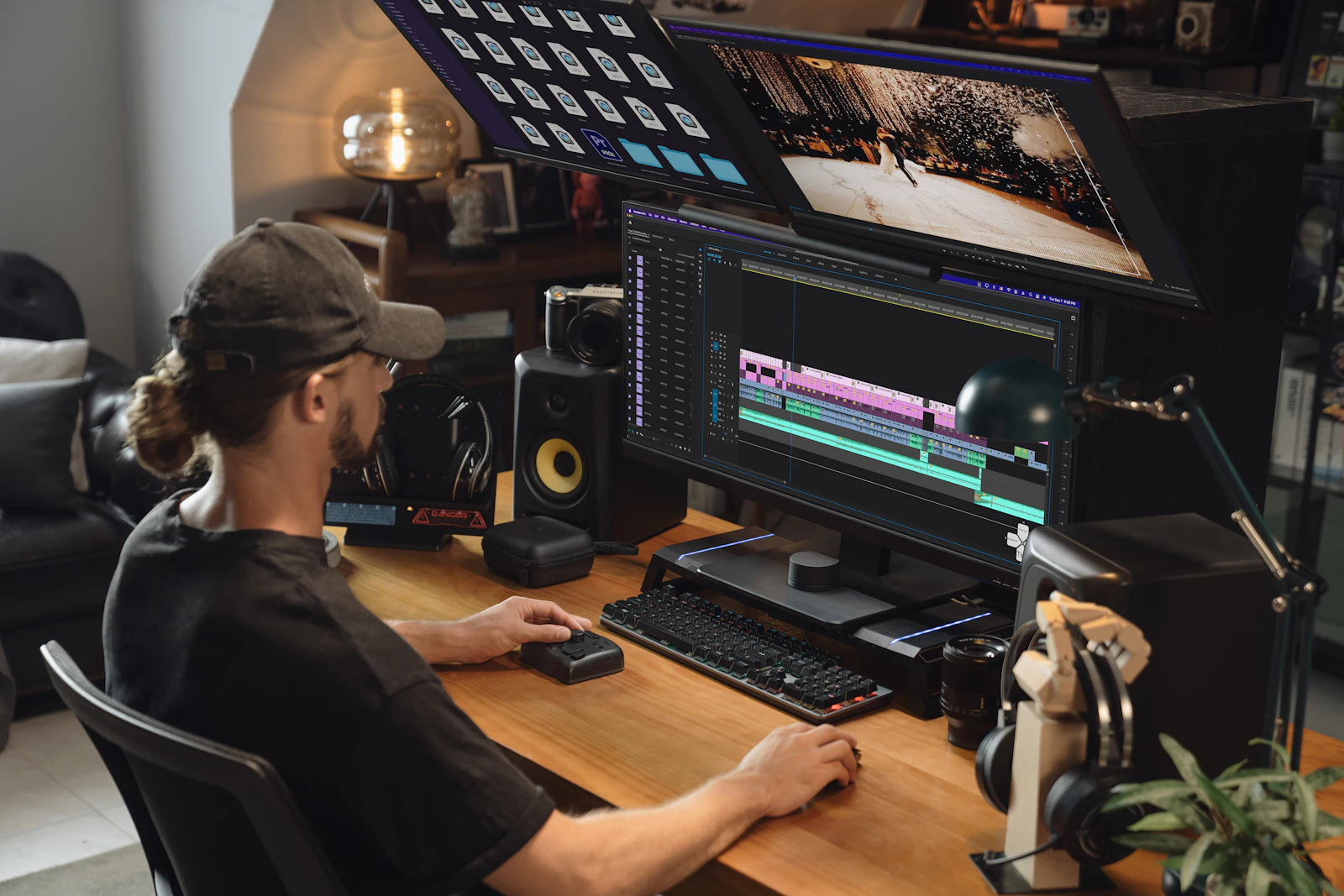
- Cover illustration: TourBox / Unsplash.
Editorial illustration. Unsplash License; not a DELA production still.