Tutorial
How language models work — and how to use them for creative briefs
Tokens and attention explain part of an LLM’s behaviour. A source-first briefing method helps keep persuasive writing separate from confirmed facts.
A language model can turn a loose paragraph into a convincing creative treatment. That fluency is useful, but it can hide a gap between what sounds plausible and what the client has actually approved. For creative teams, understanding a few mechanics is more valuable than treating the output as a finished brief.
The aim here is a practical division of work: use the model to organise and explore, and keep a clear record of the facts that control the production.
Tokens are the pieces the model processes
Text is represented using tokens, which may correspond to words, parts of words or other fragments. Many generative language models produce text by predicting successive tokens from the available context. Google’s LLM introduction explains this distinction; a token is not reliably the same thing as a word.
When you paste a brief into an application, the model processes a representation of that text. It does not automatically acquire access to the latest product specification or the conversations that shaped your campaign. Include the relevant material or identify what remains unknown.
Attention connects parts of the context
The Transformer architecture introduced in Attention Is All You Need uses attention to combine information across a sequence. This helps explain why relationships between different parts of a prompt can matter. The original paper concerns an architecture, not evidence that a particular chatbot understands your business perfectly.
A useful brief makes important relationships explicit. If a close-up must show a locking mechanism, connect that requirement to the shot description instead of leaving it in a distant collection of miscellaneous notes.
Fluent language still needs verification
NIST’s generative AI risk profile identifies confabulation: generated content can be confidently expressed yet false. In a creative brief, a small invented detail can become an expensive visual instruction. A fabricated material specification or performance claim may survive several rounds because it fits the rest of the prose.
Use a separate list of confirmed facts. For an imagined outdoor-speaker launch, that list might include dimensions, available colours and approved wording supplied by the client. If water resistance has not been confirmed, the model should flag the missing information rather than turn it into a rain sequence.
Give the model a bounded assignment
Ask for a treatment with sections for audience, main message, visual approach, shot order and unresolved questions. State that the factual list is authoritative and that unsupported claims should be omitted. Request alternatives only for the parts of the treatment that are still open.
This makes review manageable. The producer can compare three opening ideas without also having to discover whether each version changed the product. It also gives the client a smaller set of decisions to make.
Review the brief before it becomes a storyboard
Read the result in two passes. First check names, numbers, features and any statements that could be interpreted as product claims. Then evaluate pacing, clarity and whether each shot contributes to the central message. Attractive adjectives should not compensate for an unclear action.
Keep the approved brief outside the chat as a dated document. Record unresolved questions and the person responsible for answering them. When the next revision arrives, compare it with that approved version. The model can help produce language; the production team still needs a dependable agreement about what the film will say and show.
Sources and further reading
- What is a large language model? — Google
Tokens, language modelling and the role of context.
- Attention Is All You Need — Vaswani et al.
The 2017 Transformer architecture paper.
- Generative Artificial Intelligence Profile — NIST
July 2024 guidance; confabulation and documented evaluation. The production exercises in this article are DELA editorial suggestions.
Related reading
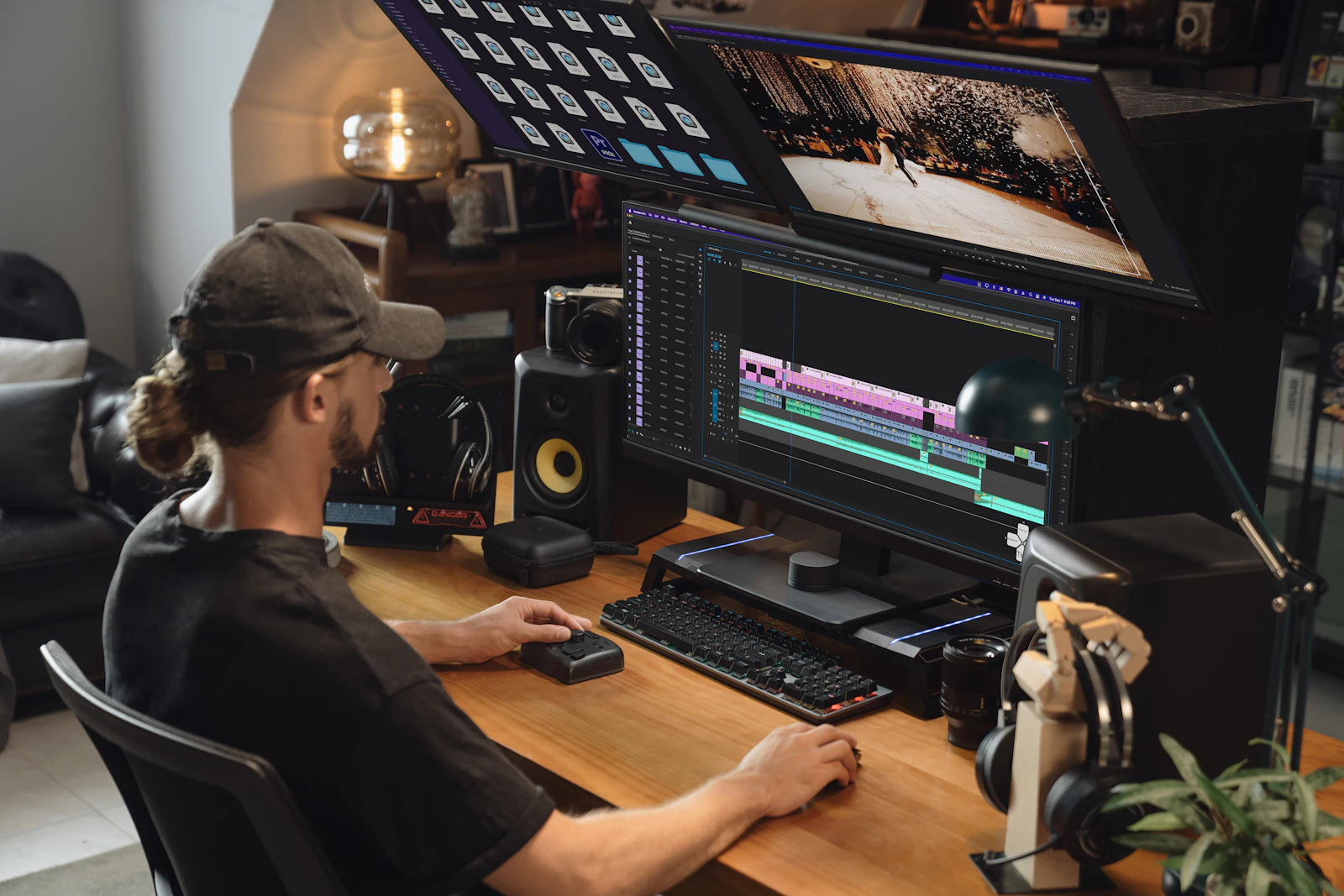
Cover image
- Cover illustration: Egor Komarov / Unsplash.
Editorial illustration. Unsplash License; not a DELA production still.